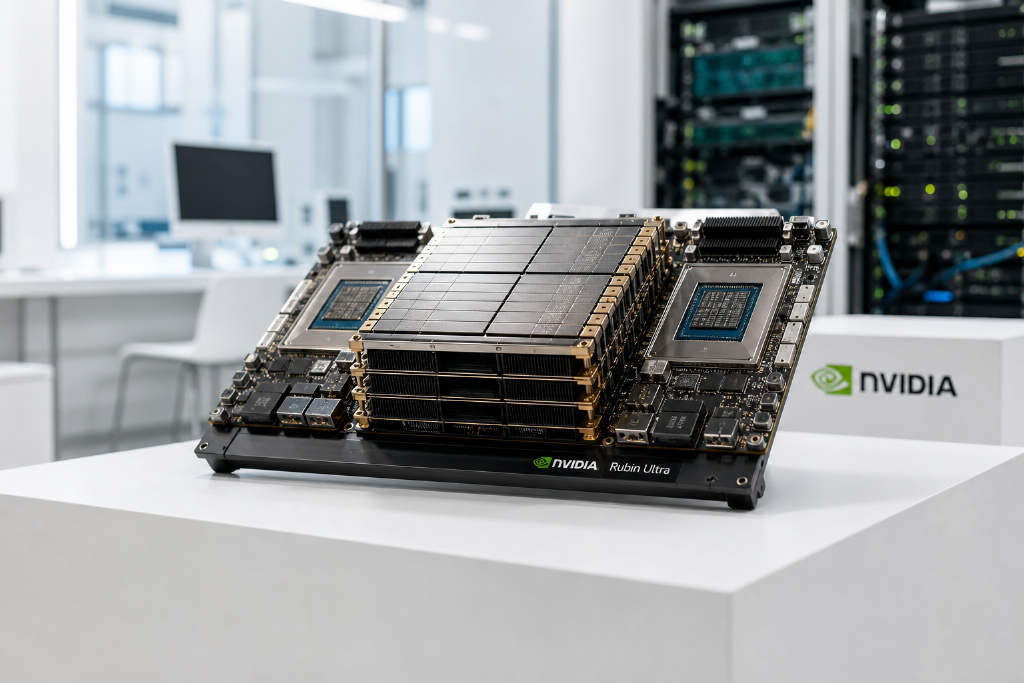
Nvidia2026-09-10 01:21:42Nvidia Said to Be Considering HBM Change for Rubin UltraAccording to ChainCatcher, citing industry sources, Nvidia is considering a change to the high-bandwidth memory configuration for its next-generation Rubin Ultra AI accelerator. The reported adjustment would shift the memory stack design from 12-high to 8-high. The report says the move is being weighed as storage costs rise, with Nvidia placing more emphasis on bandwidth cost efficiency on a per-unit basis and the overall economics of the full system. No further details were provided in the brief item, and the report frames the plan as being under consideration rather than finalized. The update centers on cost structure and system-level economics for Nvidia’s upcoming AI hardware.710
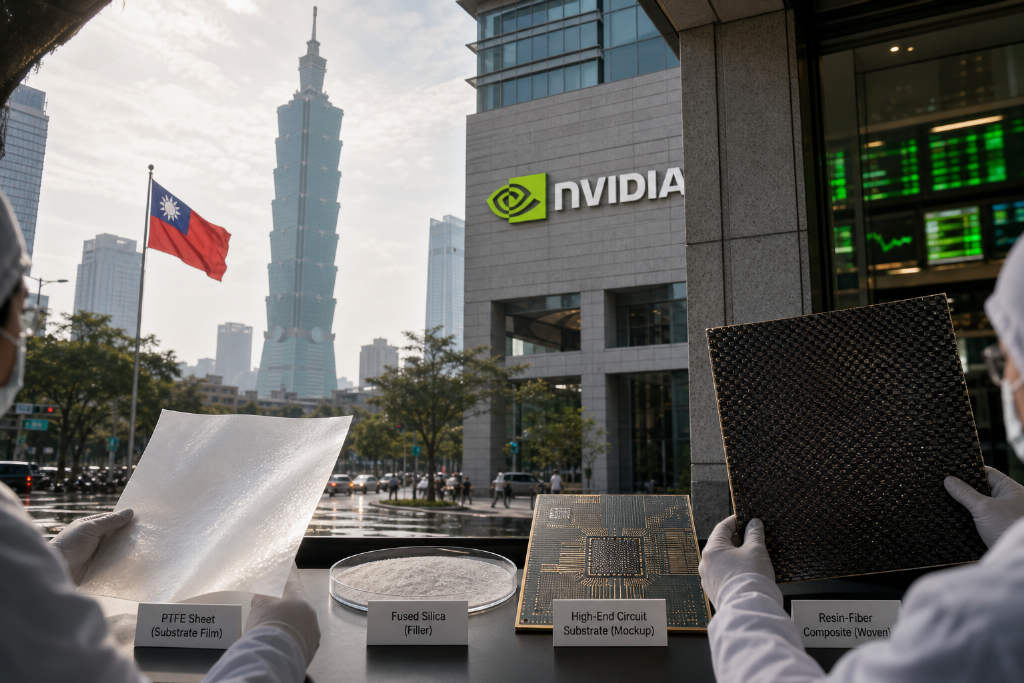
Nvidia2026-09-03 04:41:10J.P. Morgan says Nvidia’s NVL576 may use PTFE, but hybrid material designs remain the base caseJ.P. Morgan said in its latest Asia-Pacific equity industry survey that Nvidia’s Rubin Ultra-generation NVL576 switch tray is reportedly set to use PTFE, or polytetrafluoroethylene. The bank said that point should not be read as a rejection of the broader high-speed CCL upgrade path. In its view, PTFE is part of a broader materials race rather than a single decisive winner. The report said Nvidia is testing a range of materials against electrical performance targets. PTFE is on the list because of its low-loss characteristics, but being a candidate does not mean the design is finalized. J.P. Morgan added that many M10 samples submitted by suppliers still fall short of target performance, leaving technical risk in place. Instead of a pure PTFE route, the bank said the industry is moving toward a hybrid structure. Under that approach, PTFE handles low-loss electrical performance while glass-less M10 improves manufacturability. It also outlined why pure PTFE remains difficult to scale, citing high-temperature lamination limits and drilling challenges. The bank expects the hybrid approach to appear first in the switch tray of Rubin Ultra NVL576 8-rack clusters, while broader PTFE adoption may have to wait until the Feynman generation, assuming process and capacity constraints are resolved.1090
Nvidia2026-08-30 06:03:11Citrini Analyst Says Nvidia Rubin Ultra HBM Could Drop to 8 Layers, Demand May RiseAn analyst at Citrini said Nvidia's Rubin Ultra could switch from 12-layer HBM4E to 8-layer HBM, citing sources. OpenAI and Anthropic had asked for 4-layer parts but memory makers rejected the idea, so the cut may stop at 8 layers. Jukan, the analyst, attributes the move mainly to yield and cost concerns: with 12-layer HBM4E and price increases, memory could account for roughly 70% of Rubin Ultra's total bill of materials. Software optimizations such as model quantization, MLA, and computation splitting are moving rarely accessed KV cache and model states to LPDDR, CXL, and NAND, leaving HBM for the active working set. After minimum capacity is met, customers now value bandwidth over capacity. Fewer layers could improve packaging yield and lift HBM and AI accelerator shipments, potentially expanding total HBM demand. Higher bandwidth requirements also reduce the share of wafers passing speed binning, consuming extra DRAM wafer capacity. Longer term, HBM will be replaced by new architectures, likely merging memory and logic; the next two years are critical for memory makers to expand into logic.1060
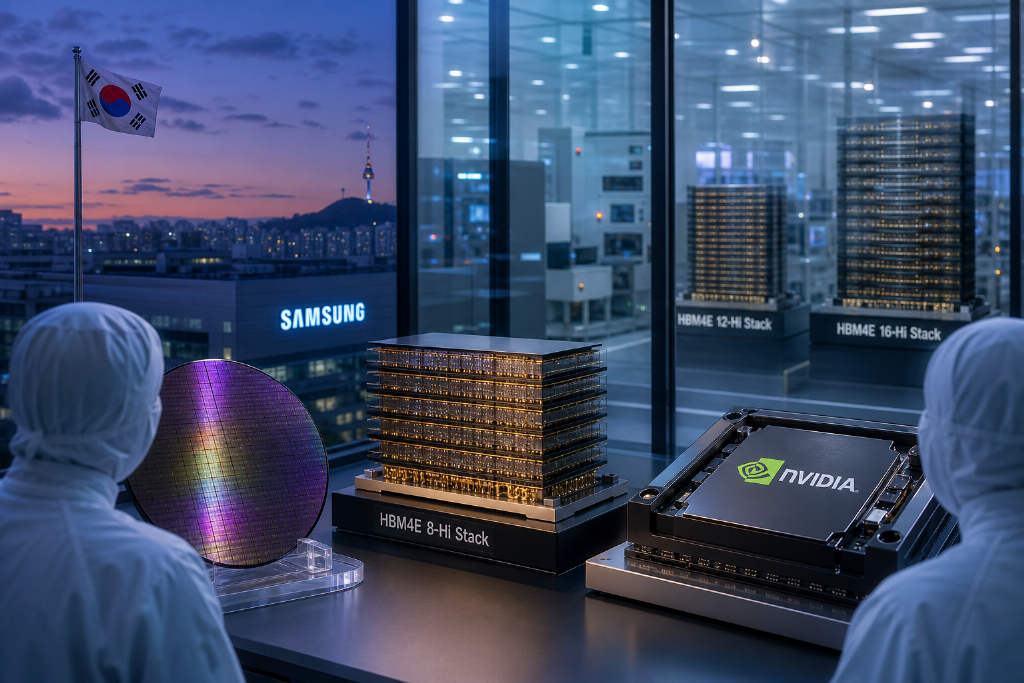
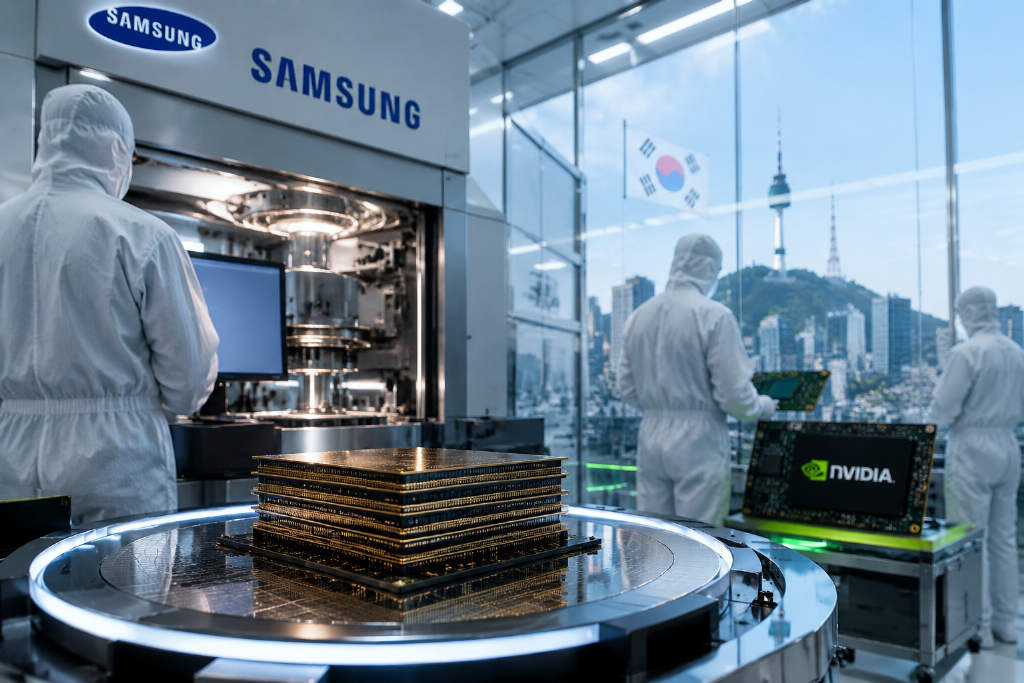
Samsung2026-08-28 06:21:45Samsung Develops 8-Layer HBM4E for Nvidia's Custom NVHBMSamsung Electronics is developing an 8-layer HBM4E product at Nvidia's request, according to Korea's Seoul Economic Daily. The chip is intended for Nvidia's custom high-bandwidth memory (NVHBM), and it uses fewer stacked layers than the 12- and 16-layer options Samsung initially prepared. Nvidia's target speed for the memory is 17–18 Gbps, about 20% faster than the 14.4 Gbps seen in Samsung's early HBM4E samples. The simplified layering is expected to reduce manufacturing difficulty in wafer thinning, precision stacking, and packaging, improving yield and supply potential. NVHBM could first appear on Nvidia's upcoming Rubin Ultra AI GPU, which is slated for next year; the platform plans to scale GPU interconnect from 72 to up to 576 units to offset lower per-GPU memory capacity. Samsung, which designs and produces DRAM, logic chips, and base dies, says it can provide one-stop custom HBM services. Industry observers note that Samsung has already shown strong transfer speeds with HBM4, and its capabilities may gain more attention as Nvidia shifts its focus from high stacking to high-speed transmission.1090
Samsung Elect2026-08-28 06:27:38Samsung develops 8-layer HBM4E for Nvidia as it targets a core NVHBM supply roleSamsung Electronics is developing an 8-layer HBM4E, or seventh-generation high-bandwidth memory, product tailored to Nvidia’s requirements, according to a report by Seoul Economic cited by ChainCatcher. The effort is aimed at securing a core partner position in the supply chain for Nvidia’s custom NVHBM memory. The report says the new design lowers stack height compared with Samsung’s earlier 12-layer and 16-layer plans, while targeting speeds of 17-18Gbps, about 20% above the 14.4Gbps level of Samsung’s initial HBM4E samples. Nvidia is said to be planning the memory for NVHBM built around its publicly disclosed NVLink-optimized specifications. Seoul Economic also said the 8-layer approach runs against the usual HBM strategy of increasing capacity through more stacked layers, but could ease backend process complexity and reduce yield pressure, making it easier to expand supply. The report added that Nvidia may use that design choice to address memory shortages. NVHBM could begin shipping with Rubin Ultra, Nvidia’s next-generation AI GPU expected next year, which would expand GPU-to-GPU interconnect scale from 72 to as many as 576. In the custom HBM market, the report said Samsung may hold an edge over SK hynix and Micron because NVHBM requires both DRAM capability and logic-die-based base die design and manufacturing.1120
NVIDIA2026-08-27 04:44:00NVIDIA Rubin Ultra material review lifts PTFE names in Taiwan as CCL and PCB stocks rallyPTFE-related names in Taiwan’s equity market surged after investors focused on a possible materials shift tied to NVIDIA’s next-generation AI computing platform, Rubin Ultra. Taimide Tech and Asia Electronic each hit limit-up at the open for a third straight session, reaching record highs of NT$352.5 and NT$86.6, with monthly gains of 108% and 76%, respectively. The broader move also lifted CCL makers such as EMC and ITEQ, along with PCB names including Fuljo and Gold Circuit Electronics. At the center of the trade is a market discussion compiled by semiconductor technology researcher @stfbutnou, who said Rubin Ultra’s orthogonal backplane is being evaluated with a "PTFE plus silica filler" filmless route instead of the long-used "M9 resin plus quartz cloth" design. Final material selection is expected in the fourth quarter of 2026. The report also stressed that PTFE is not necessarily replacing glass fiber across the board, with different materials likely to coexist depending on signal integrity, mechanical strength and thermal expansion requirements. Even with the stock rally, all Taiwanese suppliers mentioned remain in the customer qualification stage, with no confirmed mass-production orders yet. The market is now watching three points: Rubin Ultra’s final material choice, certification progress at Taiwanese suppliers, and whether PTFE, copper foil and lamination capacity can expand fast enough to support eventual volume production.2350
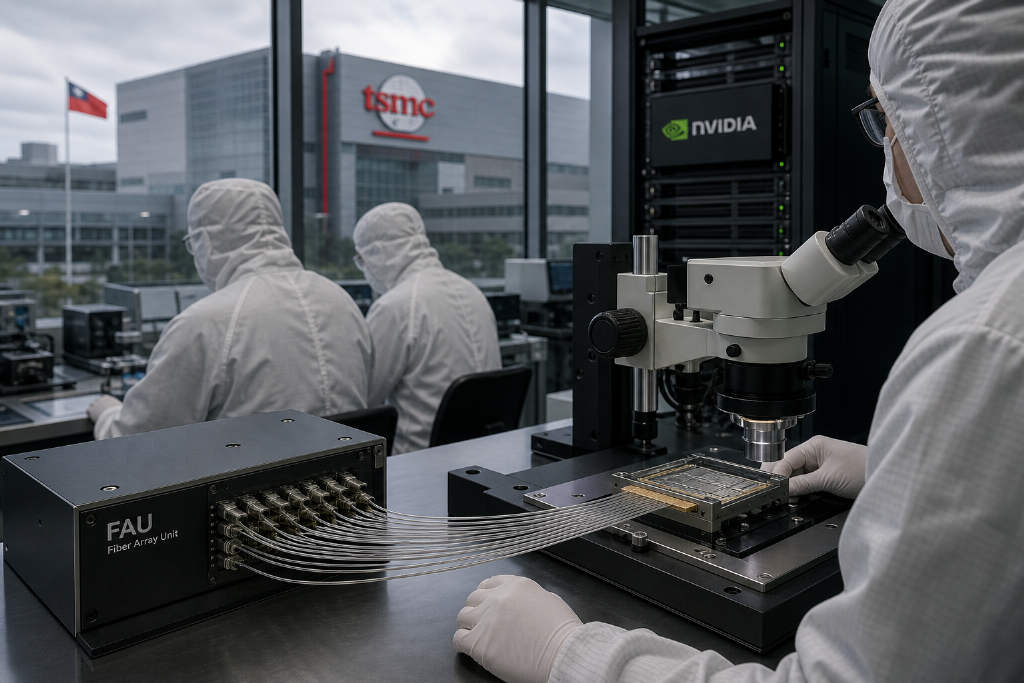
Largan Precis2026-08-24 04:27:30Largan said to join Nvidia’s optical supply chain directly through FAU, with Rubin Ultra seen as an early targetSupply-chain sources cited in local media say Largan Precision has extended its optical component work from FA, or fiber arrays, into FAU, the fiber array unit used in co-packaged optics systems. That shift would move the company from an indirect role to a direct supplier in Nvidia’s optical communications chain, while also placing it inside Taiwan Semiconductor Manufacturing Co.’s COUPE process ecosystem. The report says mass production tied to this supply chain could begin as early as the second half of next year, with the market speculating that Nvidia’s Rubin Ultra platform may be the first launch vehicle. The report ties the move to rising demand from AI data centers, where growing traffic is pushing network operators toward CPO architectures. Nvidia’s Spectrum and Quantum CPO switch lines are described as major drivers of scale-out network upgrades, and the article says Spectrum-X silicon photonics Ethernet switches have already entered full production. Based on an estimated 20,000 Spectrum-X units shipping this year, the report puts FAU demand at roughly 600,000 to 700,000 units, rising to the millions by 2027. It also says Largan’s alignment precision has reached below 0.3 microns, versus 0.5 to 0.8 microns for outside rivals cited in the piece.1300
Nvidia2026-08-14 08:46:03Aletheia says Nvidia's Rubin Ultra AI module could approach $170,000 for dual-GPU versionA bill-of-materials report from Aletheia Capital points to a sharp increase in pricing for Nvidia’s upcoming Rubin Ultra AI compute modules. The firm estimates the average selling price of the dual-GPU version at nearly $170,000, while the four-GPU configuration could reach $350,000. That would represent a 30% increase from the previous Rubin generation. The report also shows a major shift in the module’s cost structure: SoCAAM, an advanced packaged memory module, has overtaken the GPU die itself as the largest single cost component and now accounts for more than half of total BOM in the dual-GPU Rubin Ultra version. Analysts cited in the report said Rubin Ultra is expected to move directly to HBM4E instead of HBM4, while a higher-end four-die model remains on the roadmap. They also said the previously rumored-canceled Kyber platform is still moving ahead. If those plans hold, the report suggests memory suppliers, especially leading HBM vendors, could benefit as HBM4E demand scales and supply takes time to ramp.2200